

Case Studies | Asahi Kizai Co., Ltd.
Revamping handwritten weekly reports. By leveraging AI image scanning and maps, we’re helping sales teams never miss the right moment to make a visit.
Recommended Documents
-

SUCCESS STORIES OF COMPANIES THAT HAVE ACHIEVED RESULTS WITH UPWARD
Click here to download the document

Company Name
Type of industry
Business Scale
Problem
Areas of Application
Head Office Location
URL





-
results
- ■Scanning on-site signs using AI image recognition significantly reduces the time required to enter new information
- ■ By tracking the next visit date in the system, we prevent lost sales due to missed opportunities. This reduces the number of missed opportunities.
- ■ Information sharing among staff members has improved, leading to smoother collaboration among sales teams
Table of Contents
Introduction
A sign posted at a construction site. The gross floor area and project overview listed on it serve as a valuable source of information for field sales representatives.
Asahi Kizai Co., Ltd. has grown its sales by visiting construction sites—starting with these construction signs—and building relationships with customers. However, if gaps log and missed visit opportunities accumulate, this could result in lost sales opportunities ranging from several million to tens of millions.
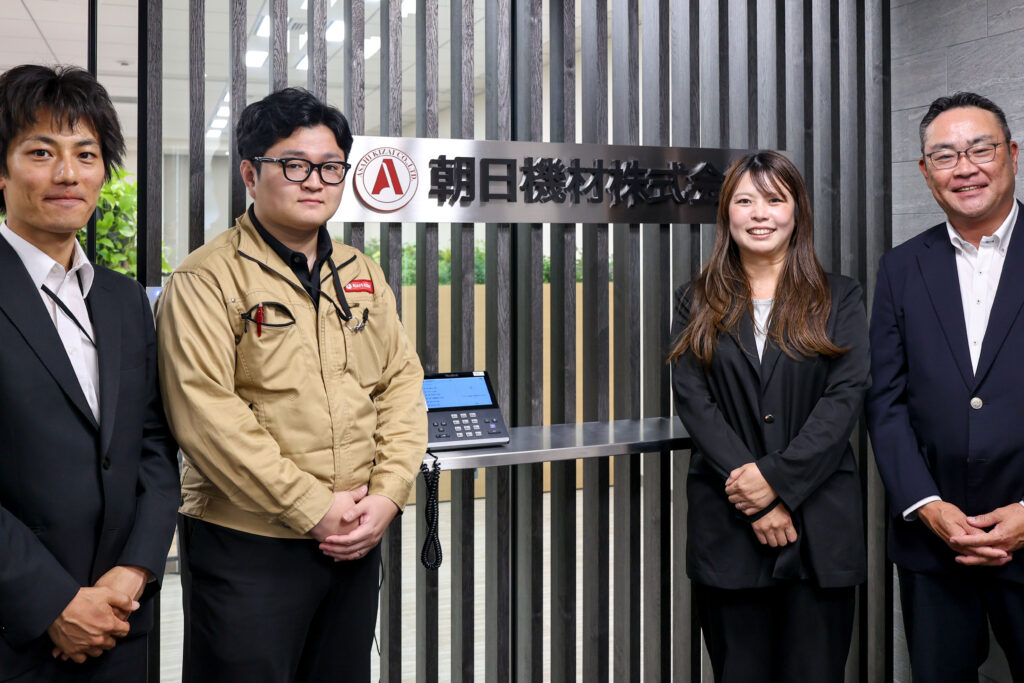
To address these challenges, we implemented UPWARD in April 2025. Now, about a year after implementation, we spoke with Mr. Nakao, General Manager of Sales Division 2, as well as Mr. Sugawara, Mr. Natsume, and Mr. Kumamaru—who are actively using UPWARD on the front lines—about how the system is being utilized and the results we’ve seen so far. (In the text below, honorifics have been omitted.)
Reason for Adoption—Appreciated That It Wasn’t Overspecified
── Could you tell us about the background behind the implementation of UPWARD?
Nakao: Internally, we had already identified several issues, including the fact that sales staff were spending too much time writing weekly reports and that there were quite a few cases where they missed the right timing to visit clients, resulting in lost sales opportunities.
Amid all this, a member of our digital team had the opportunity to speak with UPWARD at a trade show, and we found that UPWARD’s features aligned perfectly with what we had been discussing internally.
Digitizing weekly reports, visualizing activity through presence detection, and mapping features. It had everything we needed, and the fact that it wasn’t over-engineered was just right.
── Was there a deciding factor in the end?
Nakao: In addition to the fact that it can be used on mobile devices and the features being a good fit, the cost-effectiveness was a major factor. While construction costs continue to rise, competition is becoming increasingly fierce.
If we can ensure that each field office properly identifies opportunities we may have overlooked in the past, it will be worth the cost. There wasn’t a single tool we hesitated about when implementing this—it was love at first sight.
Preventing “Lost Orders Due to Inaction” — Challenges Faced on the Front Lines
── What challenges were you facing before implementing the system?
Nakao: Ideally, we’d like staff to submit activity reports daily, but when things get busy on-site, they tend to put it off. As a result, we’d ended up with a system where weekly reports were written all at once on the evening before the Friday weekly briefing. This meant we’d sometimes forget about issues that required immediate attention or overlook sites we were supposed to visit the following week. One of the reasons we decided to implement this system was to prevent such oversights.
Timing is also crucial in sales. If you spot a construction sign and make your first visit, only to find that the project has just begun and the person in charge is not there, and you simply leave it at that, you’ll miss the opportunity to revisit. The lead will go to a competitor. At UPWARD, our alert feature allows you to set a date for your next visit—such as “Revisit in 3 months”—which helps prevent oversights.
Furthermore, since our company operates on a dedicated sales representative system for each client, multiple sales representatives from our company are assigned to each client at a given site. In situations where, for example, Company A has progressed to the quotation stage but Company B’s representative has not yet taken action, there is a risk of missing out on business opportunities. Now that it’s easier to check the history in UPWARD, we can identify these kinds of misalignments.
AI Scanning of Signs and Sharing Activities—How to Use It in the Field
── How do you use UPWARD on-site?
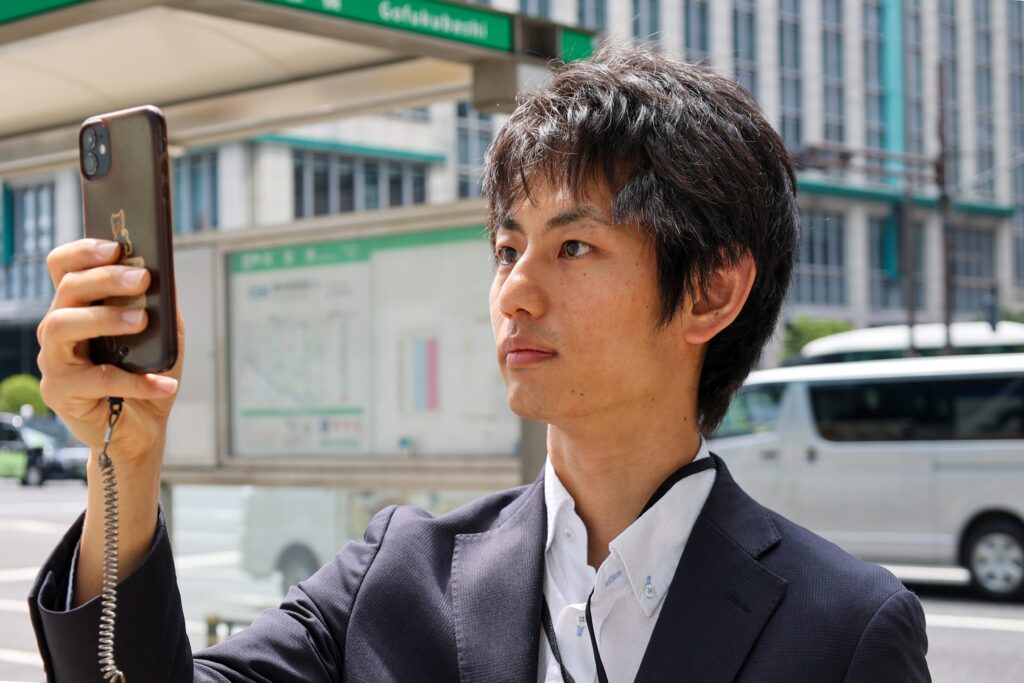
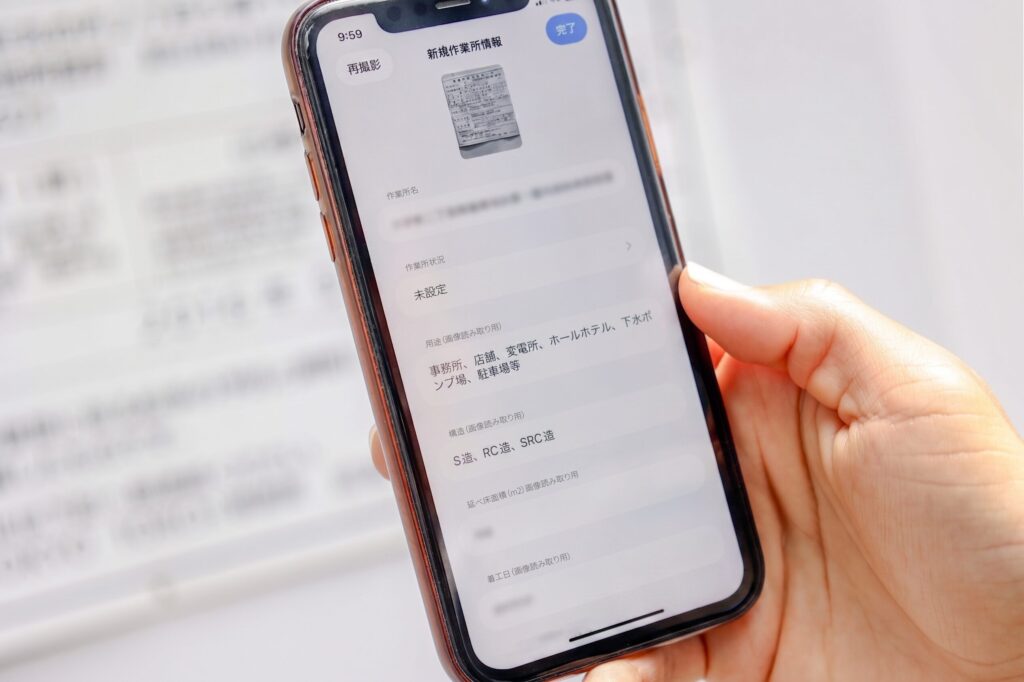
Sugawara: Basically, when we find a sign at a construction site, the first thing we do is register the information. The signs contain detailed information, such as the total floor area and an overview of the construction project, but until now, we had to enter all of that data manually.
With UPWARD, information is now automatically converted to text just by taking a photo with a smartphone, which has significantly reduced the time and effort required for data entry. Searching is also easy, so I can immediately check log what proposals other sales reps have made to the various companies involved in that project.
── How is the customer mapping feature being used?
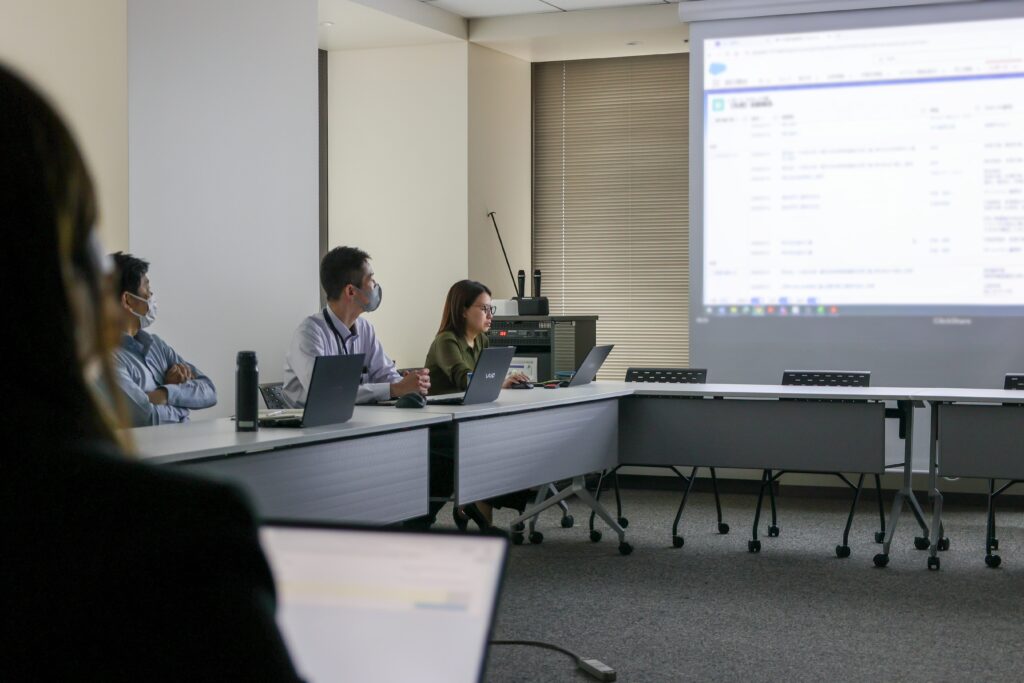
Sugawara: I check the map of the area around a client’s location on my smartphone, and if any clients are marked in red as their next scheduled visit approaches, I make a point of visiting them. Lately, during our morning sales meetings, I’ve also been reviewing the data projected on the screen to make sure we haven’t missed anyone.
Natsume: Since my next appointment date is displayed on the map, I can clearly see what I need to do over the next two weeks or so, so I really feel like it’s become easier to make plans compared to before.
Well-established within one month of implementation
── Was there any resistance from the field when the tool was introduced?
Nakao: At first, since it was a new tool, there were concerns such as, “Won’t this create more work?” and “Doesn’t presence detection amount to ‘surveillance’ of our behavior?”
However, we decided, “It’s okay if things don’t go smoothly at first, and it’s okay if there are some oversights—let’s just give it a try,” and we stopped using handwritten records across the board and began promoting the use of UPWARD. It took hold within a month.
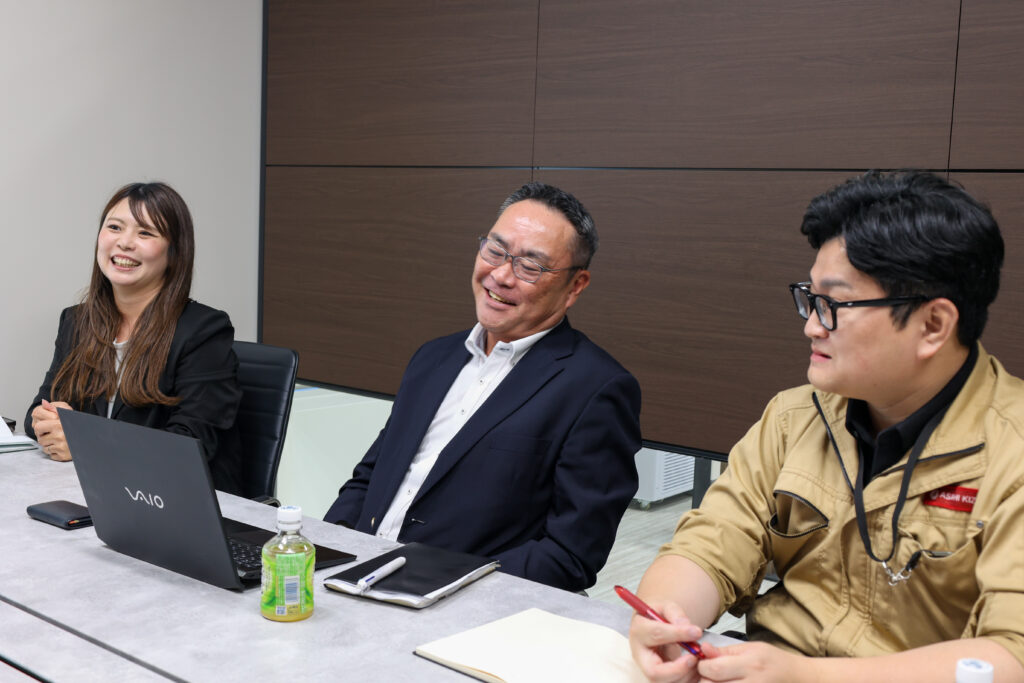
Sugawara: We actually tried using it on-site and got used to it right away. Whenever we found something that was difficult to use, we’d discuss it as a team and share our requests—like, “We’d like this part changed”—with UPWARD, and they made the necessary adjustments. It doesn’t feel like we’re being monitored, either.
Fewer "Missed Connections"—Positive Results One Year After Implementation
── It’s been a year since implementation. What benefits have you noticed?
Nakao: It’s certainly true that we’re missing fewer sales opportunities. Even when we lose a deal, there’s a world of difference between losing it after giving it our all until the very end and losing it because we never even made the initial approach.
Losing a deal because you didn't even try is the biggest waste. I really feel that we've been able to reduce that by implementing UPWARD.
Future Outlook—Integration with Core Systems and On-Site Implementation
── How do you expect UPWARD to be used in the future?
Nakao: In the medium to long term, it’s about integration with our core systems. For example, while we currently create quotes using a separate in-house system, if we could integrate it so that quotes can be viewed and shared on UPWARD in real time, it would not only facilitate the sharing of insights among sales representatives but also enable the organization to track sales trends at the quotation stage.
── Finally, if anyone on the ground has any requests or comments, please share them.
Sugawara: I think the features are sufficient, so I can't think of any specific requests.
Natsume: We’ve submitted a request to fix the way commas and decimal points are interpreted in construction signs, so we’re hoping to see improvements.
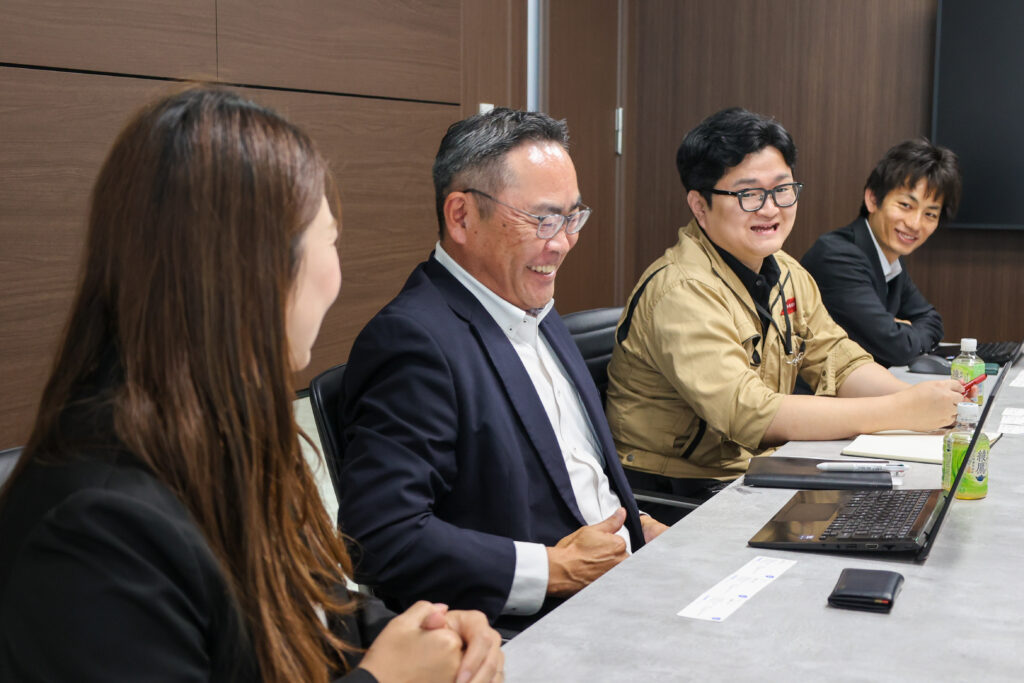
Kumamaru: I was recently transferred to the Sales Department, and after trying out UPWARD, I found myself thinking, “Sales must have been really tough before we had this.” Going forward, I’d like to make the most of it by refining the list criteria for the customer mapping feature and other features.
Conclusion
At Asahi Kizai Co., Ltd., the introduction of UPWARD has served as a catalyst for moving away from handwritten weekly reports, preventing missed sales opportunities, and establishing a digital system that supports information sharing across the organization and assists field staff.
Through this reporting, I experienced the true thrill of sales—visiting clients repeatedly to build relationships, listening to their needs and challenges, and making proposals to help them increase sales. UPWARD will continue to support you so that you can focus on the face-to-face sales activities that only field sales can provide.

A full overview of the benefits and best practices of the introduction of the system
Download a free set of 3 documents





A full overview of the benefits and best practices of the introduction of the system
Download a free set of 3 documents