

We are now in the fourth year of the 2025 IT Revolution, and three years have passed since the 2025 cliff that the Ministry of Economy, Trade and Industry (METI) has proposed. In the corporate world, the introduction of IT services in areas such as human resources, accounting, and finance is advancing at a rapid pace, and digital transformation is being realized. On the other hand, however, the sales organization, which is one of the centers that support corporate sales and growth, is lagging behind in digital transformation due to a lack of visibility into front-line activities. UPWARD, which was selected as a J-Startup company last year, participated in the "J-Startup Hour, a program sponsored by the Ministry of Economy, Trade and Industry. A panel discussion was held with special guest Yo Kurabayashi, Managing Partner / Head of Japan, DNX Ventures, to discuss breakthroughs in sales digital transformation, a management issue that needs to be addressed intensively now more than ever. After working as a venture capitalist at Fujitsu Limited and Mitsui & Co. in Japan and the U.S., Mr. Kurabayashi has served as a representative of Globespan Capital Partners and Salesforce Ventures in Japan. He joined DNX Ventures in March 2015 and currently serves as Managing Partner and Head of Japan. He holds a Ph.D. from Doshisha University and a B.A. from the Wharton School of Management at the University of Pennsylvania. Ryusuke Kaneki (President and CEO, UPWARD K.K.), born in Tokyo in 1973, is an expert in location-based services (LBS) and geographic information systems (GIS). GIS (Geographic Information System), and has built more than 200 GIS-related systems. He founded "UPWARD," Japan's first next-generation sales support SaaS that highly integrates maps and location information with Salesforce. UPWARD is currently used by more than 300 companies, mainly major corporations, and boasts the top market share in Japan as a cloud service for field sales.

[J-Startup Hour Part 2] What is the Sales Engagement that will help us to hit the cliff in 2025? The latest sales techniques advocated by J-Startup companies aiming to go global.
Recommended Documents
-

SUCCESS STORIES OF COMPANIES THAT HAVE ACHIEVED RESULTS WITH UPWARD
Click here to download the document
Pickup Articles


Table of Contents
Evolution from Horizontal to Vertical SaaS*.
*Vertical SaaS (SaaS that specializes in a specific industry and provides functions and services)


KURABAYASHI: In new business fields, when a certain market is established for horizontal SaaS, there is a movement to visualize specific data from specific industries to generate new insights. The data in a specific industry may be unique or have data that is not available in other horizontal SaaS.
In thearea of sales engagement, there are sales engagement tools in the U.S. that are specific to the financial industry. UPWARD is also a tool for major Japanese companies and manufacturers that uses location data to automatically capture data on visited locations and other information to provide new inputs and insights not available in conventional CRM.
Not only in sales engagement, but also in CRM and other fields, the trend from horizontal to vertical is a common one.
I think that UPWARD is in a representative position in the sales engagement market in this trend. I think UPWARD is in a representative position in the sales engagement market in this trend.
Technology Enables Sales Engagement

Kaneki: Japanese customers are facing issues related todata entry anddata collection. What tends to happen is that they have complete data, but it is all in text. They download them in Excel, tabulate andformulate them, and scoringis done manually based on those sheets.... Of course, some of this can be automated, but it is underwhelming, so our concept is to simplify these data collections.
It is also important that the data on customer touchpoint be tied to CRM information. The most important thing is that the data is tied together to provide geographic visualization and on-site insights, and this cycle is exactly what sales engagement is all about, and I think this is where the value of technology comes into play.
Differences between Japan and other countries in the use of technology
Kaneki: One of the reasons why sales digital transformationhurdles are higher in Japan than in Europe and the U.S. is that Japan has more discretion in the sales field. Salarymen work as sales reps (sales professionals ), and they are not in control of areas such as fulfilling quotas to some extent and writing daily reports. If they don't write, they get angry, but the part about whether or not they enter the information into the system is not reflected in their salary.
In the U.S., I think there are many sales agents, but the idea is based on CRM that each individual's activities should be properly logreported as results.
KURABAYASHI: As Mr. Kaneki said, I think low literacy andperformance-based compensation are factors. Compared to the U.S., there is still an issue with IT literacy. Especially when it comes to the senior generation, the environment is completely different from when they joined the company, so there is no culture of "I'm going to use technology and data to win over the competition and the competition. There is no compulsion from superiors throughcommunication ormechanisms to say, "If you don't put in the data, we can't pay you because we can't see the results," as a step toward utilizing the data.
In the case of the U.S., sales reps can't use IT or anything else, "If you don't use it, you can't prove your strength and outperform them. You can't even beat them." I guess that's where the difference lies.

Kaneki: Professional salespeople, those who specialize in selling, are also few in number overall. There are no people who are purely in sales work only; the job of selling through sales also includes maintenance andsupport.
KURABAYASHI : There is a culture in the U.S. of professionals who specialize and excel in their roles, and are headhunted by the next company because they are sellable human resources...but in Japan, they are described as generalists, aren't they? I am not saying that one is better or worse than the other, but I think there is a difference in the way they are used.
HOW TO SUPPORT SALES ENGAGEMENT IN THE APAC MARKET
Kaneki: We often hear from our clients that the management side of sales in Southeast Asia often wants a monitoring element. They want to check whether or not we actually went to the site and whether or not we completed the mission. In Japan, this is a direction of solution that is very much frowned upon by the field, but I wonder if it is there, especially the more rural the area, the more likely it is to be there.
Also, in the first place, they only use smartphones. No matter how graphically visible the world is on a PC, no one will use it unless it is easy to see appfrom a smartphone.
KURABAYASHI : In Asia, it's not PC-based at all. It is mobile first. Also, the infrastructure is not as well developed as it is in Japan, so when doing BtoB business, it is necessary to completepayment andorder processingat the destination. Asia has different needs, and I think it is important to grasp those needs, but in terms of the lack of infrastructure, engagement is absolutely necessary, even more so than in Japan.
Another particularly difficult issue is pricing. In the case of SaaS appapplications, the price is determined by the value provided andeconomic value, so a low ARPA (Average Revenue Per Account)inevitably means a low price per customer. appTheprice of the application will also be lower. On the other hand, the market and thenumber of IDs are very large, so the key point is how to overcome this when expanding into Asia.
Kaneki: Yes, we are trying to be creative in this area. Up to now, we have made our products as simple as possible from the field's point of view, targeting domestic users, but when we expand the market to Asia, there are some areas where we are overreacting. We will cut down to the utmost limit and keep the cost of development and provision low. I would like to provide an optimized product by dividing the plans according to customer needs, so that they can select and discard the necessary functions.
KURABAYASHI : The only thingleftis to simply get a crazy number of customers. We have quite a few users, so that is still different from Japan.
Keys to Successful Sales Engagement
Kaneki: The key to success in the sales engagement we have been talking about is how to create sales repeatability.
Within a single sales area, data entry, data collection, etc., must be done based ondata, but that data inevitably does not go in. However, if it does get in, it can provide new suggestions and sales engagement.
This, getting the data in is the hard part. It is difficult and complicated to maintain the data, so we do it for you, which is exactly what UPWARD is.
Then, give them individually optimized sales insights. Simply suggesting, " You should go to this company in this industry," or " Now would be a good time to contact them, since you have contacted and connected with them before," can raise the bar for those who are struggling to improve their performance. This is the kind of bottom-up place that large companies and enterprises in particular have trouble with.
digital transformation I think we have finally come from the time when the phrase "we have to do something about it " was just a buzzword to a situation where "we have to do something about it ". So, where is the focus? It is not digital transformationuntil we get to the point where we can "utilize" data.
digital transformationOur goal is to work together to bringdata to the point where it can be utilized, and to accompany them through technology. Please let us support you.
Thank you very much for your time today!

Watch the session video (28:50 min.)
Click here to read the first part of the dialogue article.
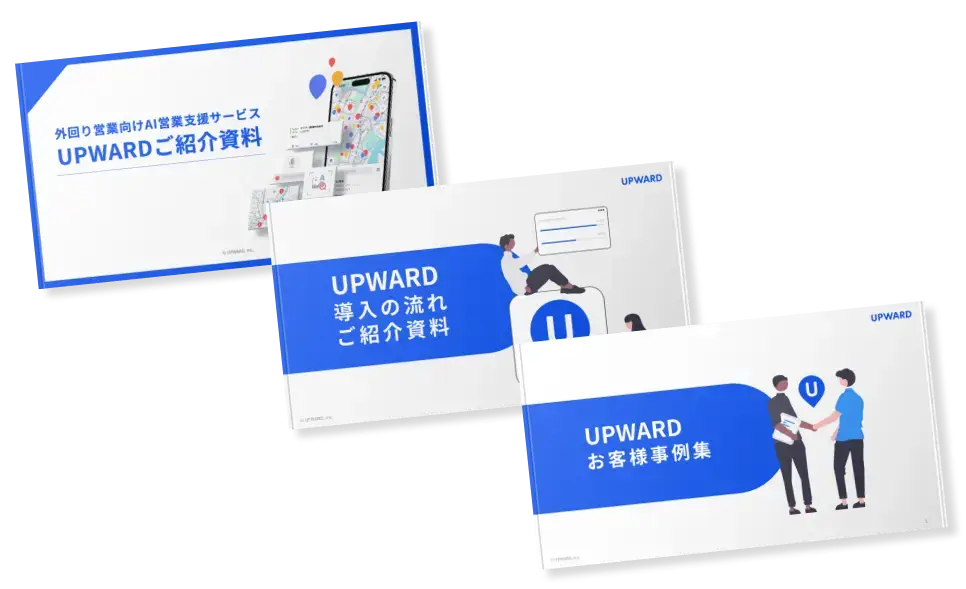
A full overview of the benefits and best practices of the introduction of the system
Download a free set of 3 documents